How Often Should You Paint the Exterior of Your Home in Connecticut?
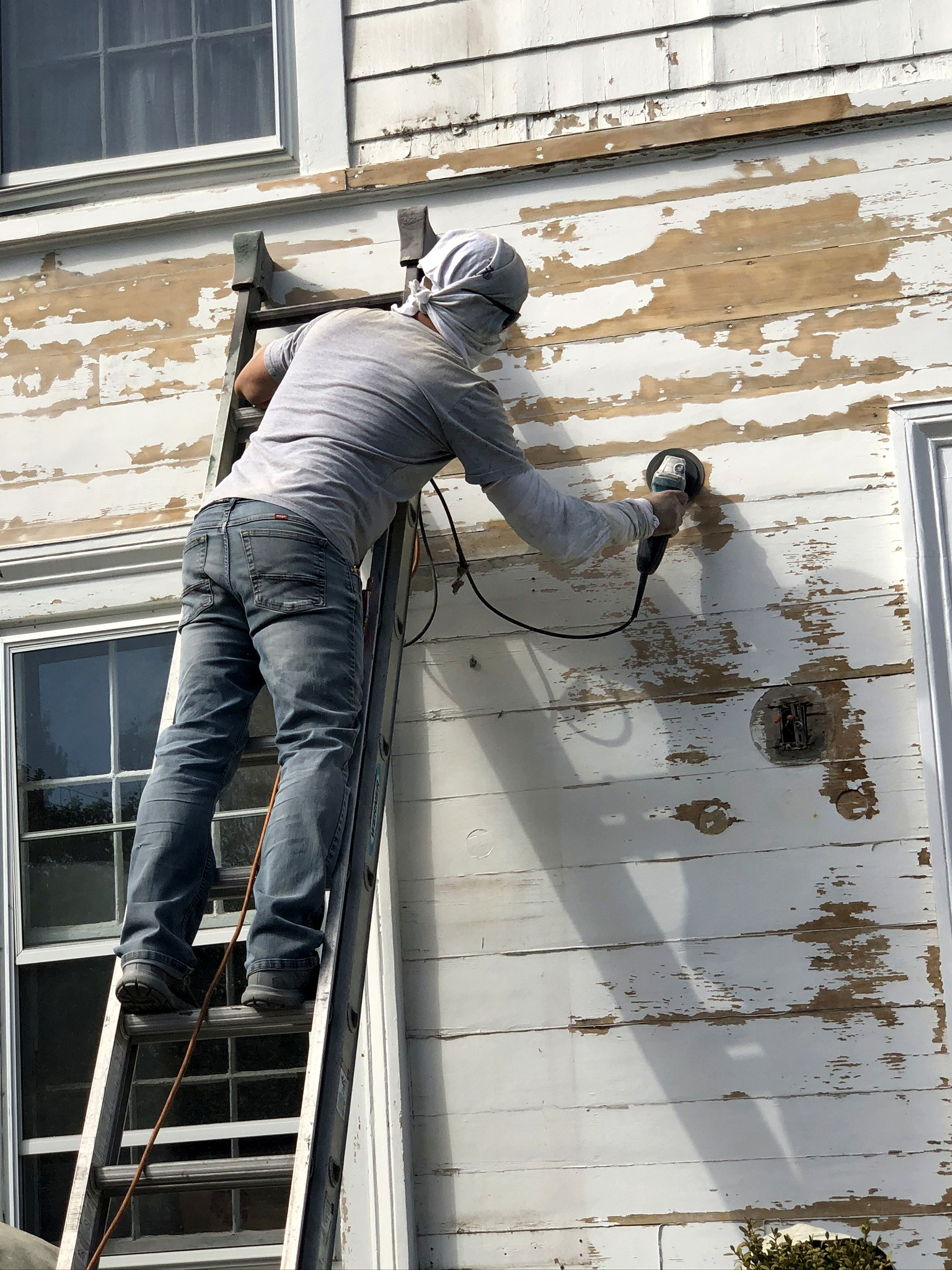
Quick Answer
In Connecticut and lower New York, plan on repainting clapboard or Hardie every 7–10 years, cedar shake every 5–8 years with stain (4–6 with paint), and stucco every 8–12 years. South- and west-facing walls fail first. Coastal homes run 1–2 years shorter on every cycle.
If you're trying to figure out when your house is "due" for a repaint, the honest answer is: it depends on your siding, your exposure, your last paint job's prep, and how punishing the last few winters have been. After 22 years on ladders across Fairfield, Litchfield, Hartford, and Westchester counties, here's the realistic timeline I give every homeowner who asks.
The realistic repaint cycle by siding type
The numbers below assume the previous job was prepped properly — scraped to sound substrate, primed where bare wood was exposed, and finished with two coats of premium acrylic. Cheap "one coat over chalk" jobs almost always fail in 3 years, no matter what the can promised.
| Siding type | Typical CT/NY cycle | South/west exposure | Coastal homes |
|---|---|---|---|
| Clapboard (wood) | 9–12 years | 7–10 years | 7–9 years |
| Hardie / fiber-cement | 12–17 years | 10–14 years | 10–12 years |
| Cedar shake (stained) | 7–10 years | 6–8 years | 5–7 years |
| Cedar shake (painted) | 6–8 years | 5–7 years | 5–6 years |
| Stucco | 10–14 years | 8–12 years | 8–10 years |
| Aluminum / vinyl | 12–17 years (paint-bonded) | 10–14 years | 10–12 years |
| Brick (painted) | 17–22 years | 14–17 years | 12–14 years |
Why New England climate is so hard on paint
Connecticut and lower New York hit your siding with four enemies, often in the same week:
- Freeze-thaw cycles. Water that wicks into a hairline crack expands when it freezes. After 30 cycles in a single winter, a small check becomes an open seam.
- Summer humidity. June through September we run 70%+ relative humidity for weeks at a time. Mildew loves shaded north walls, especially under tree cover.
- Salt air. Anything within 5 miles of Long Island Sound or the Hudson takes a steady salt load that breaks down film integrity.
- UV on south & west elevations. By year 5, your south-west corner can be visibly faded while the north side still looks new. That's not "the sun" — that's UV damage to the binder in the paint film.
Rule of thumb: walk your house's south and west elevations every spring. If you can wipe chalk off the surface with a wet rag, the binder is already compromised. You have one season, maybe two, before active peeling.
How prep changes everything
Two homes side by side in Bethel, same builder, same Hardie siding, same year. One was repainted in 2014 by a low-bid crew that "scuffed and rolled" — sprayed it without scraping, primed nothing, no caulking. By 2018 they were paying again. The neighbor used a real prep protocol — pressure wash, fully scrape, hand-sand feathering, prime every bare spot, replace caulk at all moving joints, two finish coats — and ten years later it still looks fresh.
The cheapest paint job is the one that lasts. Always. The math doesn't lie: a $9,000 job that lasts 4 years costs $2,250/year. A $14,000 job that lasts 12 years costs $1,167/year. The "premium" job is half the price.
Maintenance steps that buy you another 2–3 years
- Annual gentle wash. A soft-bristle brush and 1:10 bleach & water knocks down mildew before it gets into the substrate.
- Caulk inspection every spring. Re-caulk window casings, door trim, and fascia seams as soon as you see a hairline gap.
- Trim back tree cover. Branches that touch siding hold moisture against the film and abrade it on windy days.
- Spot-prime exposed wood the day you see it. A nail head poking through, a knot bleeding, a piece of trim with a check — primer it within a week. Don't wait for "the next paint job."
- Clear the gutter line. Overflowing gutters dump water down the fascia and into the wall cavity behind it. That's how a paint problem becomes a rot problem.
How to tell you're already due
Five signals you're past the point of "I'll do it next year":
- Chalking. White powdery residue on your finger after wiping the surface. The binder has degraded.
- Checking. A grid of fine fissures, especially on south-facing walls. The film has lost elasticity.
- Peeling at trim or windows. Always starts at moving joints because that's where moisture enters first.
- Caulk failure. Caulk that has pulled away or cracked at any seam — water is getting behind your siding right now.
- Color fade only on south/west walls. If the front and back of your house don't match anymore, you're 6–18 months from active failure.
For a deeper diagnosis, see our companion piece on the 5 warning signs your Connecticut home needs an exterior repaint.
What we charge to do it right
For 2026, full exterior repaints in Connecticut and New York with our complete prep protocol typically run $4,500–$14,500 depending on home size, stories, trim detail, prep condition, and paint grade. Larger Gold Coast and country-estate projects can go higher. Get the breakdown on our Fairfield County exterior painting cost guide or request a free on-site estimate — every quote is written and itemized.
Want a real diagnosis on your home?
Free, no-pressure on-site estimate within 48 hours. We'll show you exactly which walls are failing and what a real repaint costs.
Request My Estimate →Frequently asked questions
How often should you paint the exterior of a house in Connecticut?
In Connecticut and lower New York, plan on repainting clapboard or Hardie siding every 7–10 years, cedar shake every 5–8 years (with stain) or 4–6 years (with paint), and stucco every 8–12 years. South- and west-facing walls fail first. Coastal homes near Long Island Sound run 1–2 years shorter on every cycle.
What climate factors shorten paint life in CT & NY?
Freeze-thaw cycles in winter, high humidity from June through September, salt air on the coast, and intense UV on south- and west-facing walls all shorten paint life. Homes shaded by tree cover hold paint better, but trap moisture that causes mildew and lifting if the prep was rushed.
How can I tell my exterior paint is failing?
Look for chalking (white powder when you wipe), checking (small fissures), peeling at trim or window seams, caulk pulling away from joints, and color fade more pronounced on south and west elevations. Any of these means you are 6–18 months from active failure.