5 Warning Signs Your Connecticut Home Needs an Exterior Repaint
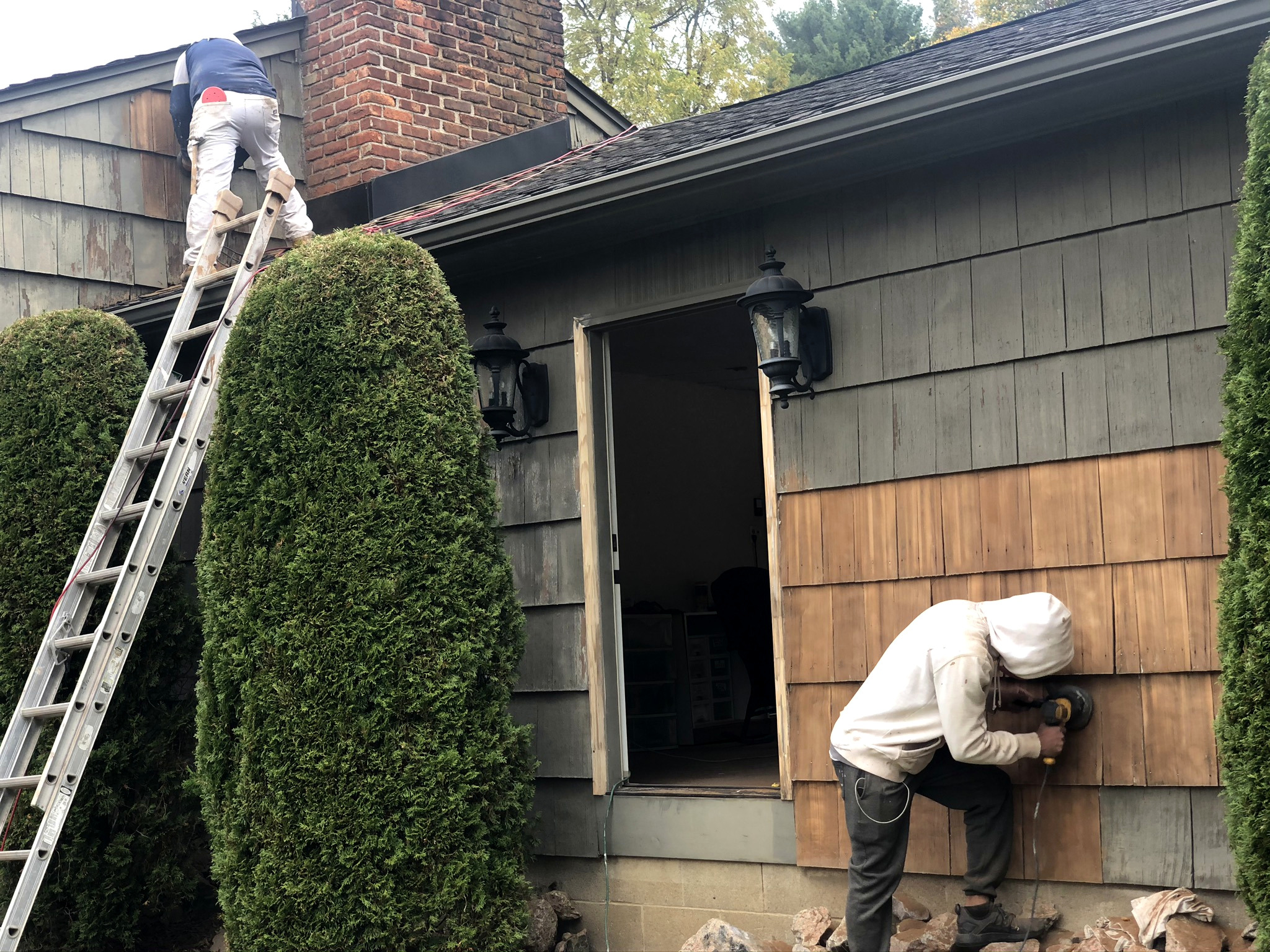
Quick Read
If you spot any of these five signs — chalking, peeling, caulk failure, wood rot, or asymmetric color fade — your home is past due for an exterior repaint. Acting this season costs ~50% less than waiting one more winter.
Most homeowners ask about exterior painting after they see a problem they can't ignore. The truth is the visible problem is the late stage. The early signs show up 6–18 months earlier, and catching them in spring saves you thousands in carpentry repair by the next paint season. Here are the five things every Connecticut and New York homeowner should walk their house and look for in April.
Chalking — white powder when you wipe
Run your hand or a wet rag along your siding on a sunny south-facing wall. If you come away with a fine white residue, that's chalking. The binder in the paint film — the resin that holds pigment together and bonds it to the substrate — has degraded from years of UV exposure. Chalking surfaces will not accept new paint properly without a thorough soft wash and a bonding primer. Once chalking starts, you have one season, maybe two, before the film begins to release in sheets.
Where to look first: south and west elevations. Bay windows that face the street. Garage doors. Anything in direct afternoon sun.
Peeling at trim, windows & door casings
Paint failure almost always starts at the moving joints first — where the trim meets the siding, where the window casing meets the clapboard, where the door frame meets the threshold. That's because moisture enters at seams. Once you see paint lifting at any of these locations, water is already getting behind your paint film and into the wood substrate. Wood that stays wet rots — and rotted wood requires carpentry replacement, not just sanding and painting.
What it costs to wait: a $200 wood-rot patch this spring becomes a $1,800 fascia replacement next spring.
Caulk pulling away from joints
Walk around the house and look at every window, every door, every fascia seam. Premium polyurethane sealant typically lasts 8–12 years. When you see a hairline gap between the caulk and the surface — that gap is letting water into your wall. Caulk failure rarely happens in isolation; if one window has failed caulk, most of the others are within a year of failing too.
This is the easiest sign to miss because most people never look at their own caulk. But it's the cheapest to fix early — recaulking during a paint job is essentially free; recaulking after rot has set in means tearing out and replacing whole sections of trim.
Wood rot — soft spots in trim, sills, fascia
Take a screwdriver and gently push it (don't stab) into the bottom corners of your window casings, the lowest course of your fascia, the bottom of your corner boards, and any spot where the paint shows discoloration or staining. If the screwdriver pushes in easily, the wood is rotted and needs replacement before paint will hold. This is more common than homeowners think — by year 6 or 7 of a previous paint job, almost every Connecticut home has at least one or two soft spots that need carpentry attention.
Rot doesn't repair itself, and it spreads. A 2-inch soft spot in your fascia this year is an 8-inch one next year, and by year three it's caused water to track into the wall cavity and damaged the sheathing.
See examples on our carpentry showcase.
Asymmetric color fade — the front looks "off"
Walk to the curb. Look at your home's front and one side simultaneously. Then walk around to the back. If the front (south or west) looks visibly faded compared to the back (north or east), your paint film is approaching the end of its service life. UV degrades pigment first on the elevations that get the most direct sun, so when the front is noticeably "duller" than the back, you're already past the midpoint of the failure curve.
This sign is easy to miss because the change is gradual. The fastest way to catch it: pull up a real estate photo from when the house was last painted (Zillow keeps these going back 10+ years) and compare to today.
Three or more signs? Call this week, not next year
Each of these five signs is a yellow flag on its own. Two or more is a red flag. Three or more and you're not deciding "should I repaint?" — you're deciding "do I repaint this year, or do I add carpentry to the scope after one more winter?" The math always favors acting this season.
Real cost difference: a 2,500 sq-ft colonial caught at the chalking-and-fade stage typically costs $9,500–$13,000 to repaint. The same home caught after one more winter, with peeling and rot, runs $13,000–$18,000 because of the carpentry add-ons. Acting in spring is the cheap path.
What to do this weekend
- Walk all four elevations of your home with a clipboard.
- Wet rag test for chalking on south and west walls.
- Photograph any peeling at trim, windows, doors, fascia.
- Push-test (don't stab) any suspect spots with a screwdriver.
- Note caulk gaps at windows and doors.
- Compare front-of-house color to back-of-house color.
If you find any of the five signs, you don't need to panic — but you do need to get an estimate on the calendar. Most premium summer painting slots in Connecticut are claimed by mid-May. See our guide to the painting season for why timing matters.
Not sure what you're looking at?
Free on-site assessment within 48 hours. We'll walk every elevation with you and tell you honestly: minor maintenance, full repaint, or carpentry first.
Request My Estimate →Frequently asked questions
What does chalking on paint mean?
Chalking is a fine white powder you can wipe off your siding with a wet rag. It means the binder in the paint film has degraded from UV exposure and is no longer holding the pigment together. Chalking surfaces won't accept new paint properly without a thorough wash and primer.
Is peeling paint dangerous?
Peeling paint is a sign that moisture is reaching bare wood. Once exposed, the wood absorbs water, swells, rots, and the failure expands. Beyond the cosmetic issue, peeling on a home built before 1978 may also be a lead-paint hazard. EPA-certified contractors handle pre-1978 surfaces under RRP rules.
How quickly should I act on warning signs?
Warning signs identified in spring should be addressed during the same paint season (April–October). Waiting one more winter typically doubles the prep cost — what was a scrape and prime job becomes wood replacement and full carpentry.